
We're currently updating our site. Thank you for your patience!

Honouring 150 Years of Faith, Resilience, and Heritage: From Struggle to Strength
The arrival of Indian indentured laborers in Natal in 1860, a result of British colonial influence, marks a pivotal moment in South African history. This migration, driven by the demand for labor to sustain the burgeoning sugar industry, led to the establishment of vibrant communities and the introduction of rich cultural traditions that continue to shape the region today.
In response to labor shortages, particularly in the sugar industry, British officials sought workers from India, leading to the first wave of indentured Indian laborers arriving in Natal. These workers, primarily from the Tamil and Telegu speaking regions of South India and Hindi speaking from the North of India. They faced harsh working conditions, but they also brought with them a deep commitment to their faith and culture. One of the most significant expressions of this was the establishment of religious institutions, including the Shree Emperumal Temple in Mt. Edgecombe barely 15 years of them settling in Natal.
Founded in 1875, the Shree Emperumal Temple was one of the earliest, if not the first Hindu temples built by the indentured community in South Africa. Dedicated to Vishnu, the temple served as both a place of worship and a center for social and cultural gathering. The community of laborers, often separated from their families, found strength and solace in the temple, which became a focal point for communal unity and support.
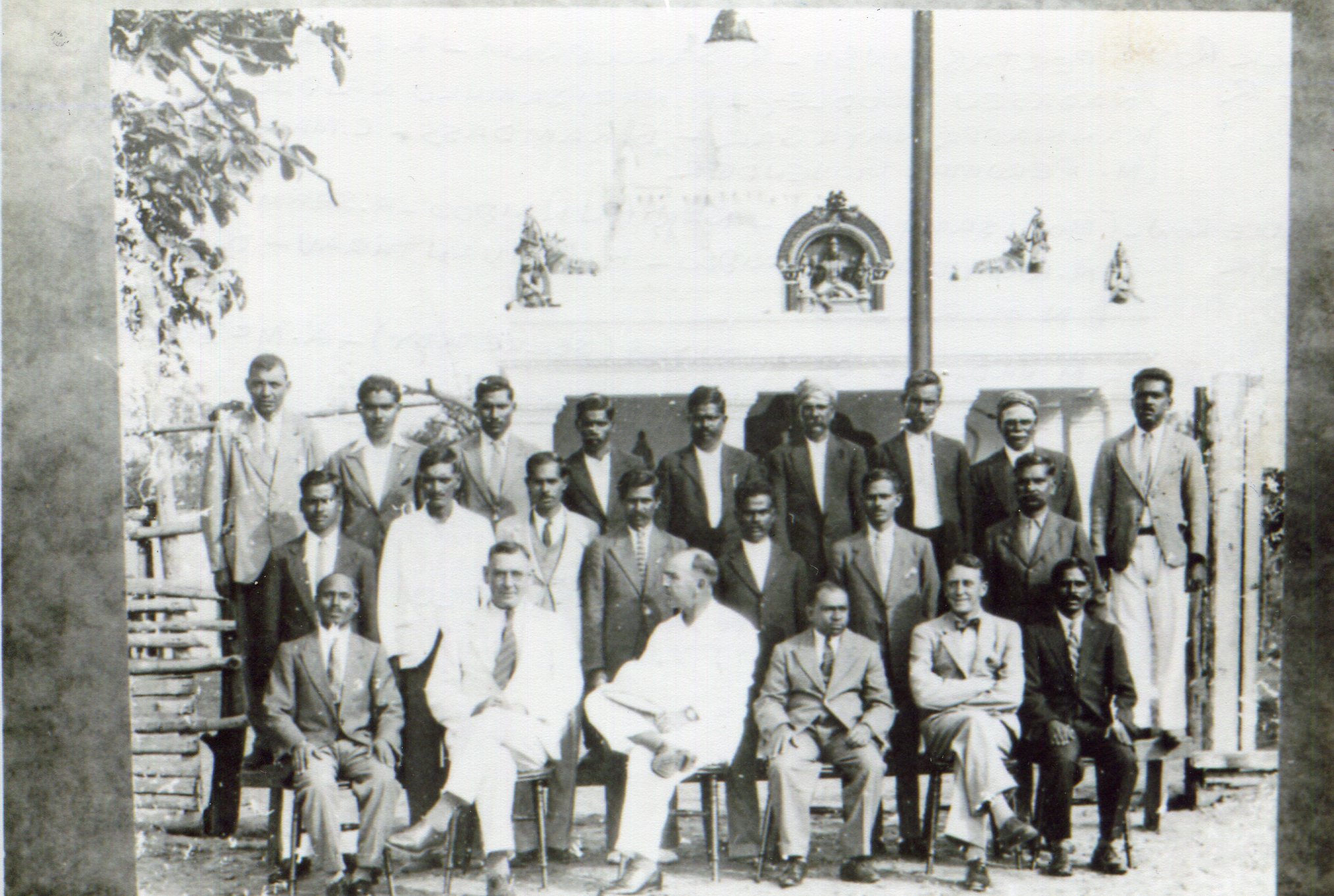
As the Indian community in Mt. Edgecombe grew, so did their prosperity, and in 1925, under the guidance of Kistappa Reddy, a renowned temple architect, the temple underwent significant expansion. The addition of a brick-and-concrete structure replaced the original wooden building, and a series of intricate decorations, including a gilded pinnacle and bell tower, were added over the following decades.
This temple not only stands as a spiritual haven but also as a testament to the enduring contributions of Indian laborers to the development of South Africa’s cultural landscape. The Shree Emperumal Temple remains a symbol of resilience, faith, and community solidarity, having been expanded and renovated over the years to serve the needs of successive generations.
Today, the temple is a beacon of religious and cultural significance, maintaining its importance as a center for social interaction, education, and celebration within the community from far and wide. Its legacy continues to honor the sacrifices and contributions of the Indian indentured laborers who played an integral role in shaping the history of the region.
The Shree Emperumal Temple stands not just as a place of worship, but as a living monument to the resilience and cultural richness of the Indian community in South Africa, whose story is deeply intertwined with the development of the sugar industry and the broader history of the nation.
The History of the Shree Emperumal Temple
The history of the Shree Emperumal Temple begins with the construction of the first temple in 1875. This simple wooden and iron structure stood proudly in the main square of the settlement. Although the majority of indentured settlers in the area were Saivites from Madras (South India), the temple was dedicated to Vishnu, a North Indian deity. This decision was influenced by two factors. First, there was no formal partition of settlers based on their regions of origin, meaning the settlement was a mix of various linguistic and religious groups. Secondly, many Saivites regarded Thirupathi, a famous Vishnu temple in the south of India, as a significant place of worship. Thus, the Shree Emperumal Temple catered to the religious needs of not just the Tamils, but also the Hindis and Andhras.
As the community prospered economically over time, their spiritual and cultural needs grew as well. In 1925, the community sought to expand the temple, commissioning Kistappa Reddy to build a larger and more elaborate brick and concrete structure. This project was made possible through the financial and material support of the employers in the region, who recognized the importance of culture and religion in maintaining social stability. They understood that fostering a cohesive, stable community would help safeguard their labor force.
The workers themselves, ranging from skilled Sidars to laborers, also played a vital role in constructing the temple. Their contributions came in the form of monthly donations, ranging from 20s to 5s, which were deducted from their wages over several months. This collective effort, combining financial contributions and labor, led to the successful completion of the temple. Oral sources credit individuals such as the compound manager and Mr. Sklar, the head of the labor force, for offering significant help in overseeing the construction.
Once the building was completed, the community came together to consecrate the newly constructed temple. A copper-shaped Kalsam, an emblem of divine power, was installed at the temple’s peak. Over time, the Kalsam was plated with gold, a process carried out by Mr. Kista Pather, a local jeweler from Ottawa. The community’s gold jewelry was smelted down and used for this purpose, symbolizing their collective devotion.
In 1934, women workers under the guidance of Mr. Mariemuthoo Siclar contributed to the construction of the Bell Tower. The bell, which symbolized the eternal sound of “Om,” played a crucial role in preparing the devotees for prayer and announcing the start of worship to the surrounding district.
The final addition to the temple came in 1937 when the arched cylindrical gopuram (gateway) and front wall were completed. This was overseen by Kaniappen Chinsamy, marking the completion of the temple’s expansion.
Through the tireless efforts and contributions of the community, the Shree Emperumal Temple evolved from a modest wooden structure to a beautiful, enduring monument. It stands as a testament to the unity, devotion, and cultural pride of the community, continuing to serve as a focal point of spiritual and social life for generations to come.